It was a typical Wednesday night. I'd just finished work at my full on and fulfilling 9 to 5 as a high school teacher and it was time to head to the church building in which the weekly youth club I volunteered at was running. I was tired and not particularly expectant for anything out of the ordinary to happen.
It just so happened that this particular night, we watched a video sermon. A well-known preacher flooded our screens with positivity and power prose.
I was still tired & unexpectant.
And then the atmosphere shifted and with that, so did my slump.
"You are a masterpiece."
Another bit of power prose? Maybe. But something about these words echoed around the room and these 14 and 15-year-olds from the surrounding local council estate started listening like this wasn't just another semi-interesting talk from another semi-funny guy.
Once the man on the screen had finished, it was back to games of pool and table tennis with a side of pizza. But one of the boys couldn't quite shake it.
"I am a masterpiece."
Whether he'd never been told that he was special before, or just that he welcomed the reminder, I don't know. But those words put a smile on his face and a spring in his step. Those words pushed his shoulders back and held his head high.
That's what happens when we live chosen, lovely.
It's said that up to 80% of the world's population suffer with low esteem. Did you know that when it comes to women, those statistics get even more alarming with self-esteem beginning to be a 'thing' by the age of nine? Nine.
That's why being told you're a masterpiece by a charismatic stranger can really hit a nerve.
The thing is, we've been told it all along. Life just gets too noisy for us to hear it and so we start listening to everyone else telling us we're not enough.
You are more than enough. You are chosen.
The birds, sea, sky and stars only got a solid 'good'. But you? Very good.
Translated from the Hebrew word 'tob', this good means more than we give it credit for. Beautiful, best, most and precious are just a few of the words our English language possesses to try and do 'tob' some justice.
You are beautiful, best, most, precious and chosen by a holy and perfect God who literally couldn't be more thrilled with the way you turned out.
The problem we've got is believing that. I mean, we start to stop believing it when we're nine years old. Nine.
Question 1 of 5
Which of these statements is hardest for you to believe right now?
Keep reading
The report from Canaan
Want to see what the ramifications are when you take an accurate stance on your powerful position as a daughter of God? Let's take a look at God's word on the matter…
At the beginning of Numbers, chapter 13, God speaks to Moses. He wants him to send some men to spy out the land of Canaan. We learn almost immediately, in verse two that the land has indeed been promised by God. This task was obviously sent to teach the people something and not because God just wasn't sure what Canaan would be like!
Moses gathers 12 men from the different tribes to go and do what the Lord had asked. After forty days the men come back and say that the land is indeed 'good'. That it 'flows with milk and honey'… BUT.
Now that word 'but' isn't one of God's favourites unless His name follows it.
In this instance, the 'but' was that the people already living in the land were really strong and the cities very fortified.
They saw a good and beneficial thing (the land) but saw the opposition as greater.
Question 2 of 5
When you think about the thing God keeps bringing back to your attention, which statement feels most true?
Keep reading
One valiant voice
All but one saw this. Imagine that one lone voice amidst the 12. It wasn't a quiet and timid voice either. It was a valiant voice, full of faith.
No one agreed. No one.
Twelve people (plus a couple of leaders) in a room, talking about inhabiting a land which God had already promised them. Only Caleb says it's possible.
The rest don't even do that awkward silence thing where you disagree but don't want to offend the person raising the point. They go one step further and literally oppose what he's saying. Loudly.
Verse 33, though, to me is the giveaway as to why this happens. Fear.
Question 3 of 5
Which statement sounds most like your inner dialogue?
Keep reading
The grasshopper perspective
The rest of the men saw the opposition as so much bigger than them. Their perspective of not the opposition, but of themselves changed everything.
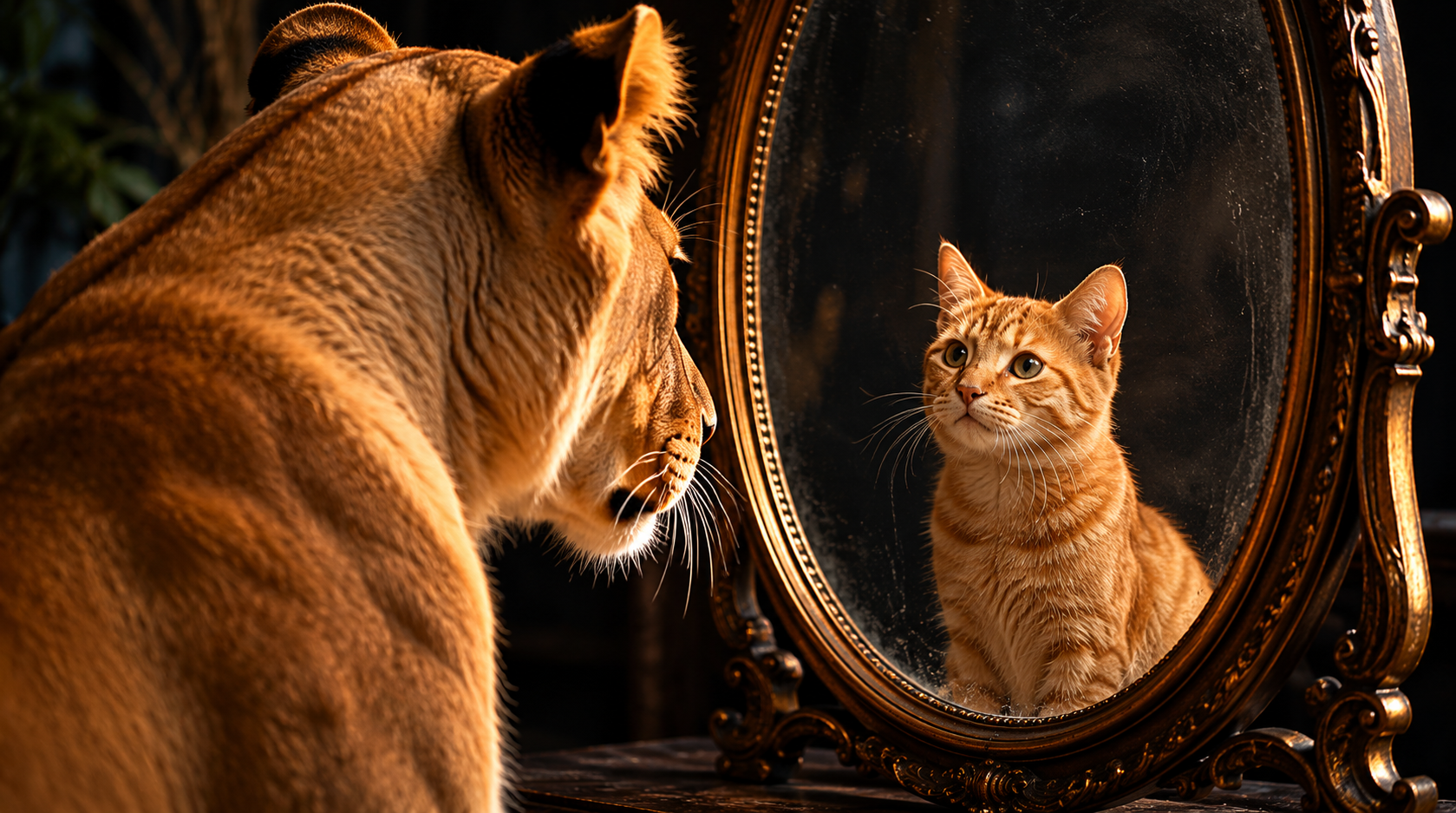
They saw themselves as insignificant 'grasshoppers' in the face of their opposition.
"...and so we seemed to them."
Their perspective of themselves enforced the view that their opponents took of them!
If you walk into a battle looking, feeling, acting and behaving like the underdog before it's even begun, what sort of impression are you giving off?
YOU HAVE THE VICTORY IN CHRIST!
I had to shout that part because I believe it so, so strongly and that's why I get so excited thinking about this story.
The other men looked at their opposition and then back at themselves and thought 'no way'.
Caleb looked at the opposition and then back at himself and thought 'no way - BUT GOD!' and that's what changed the game.
Question 4 of 5
What feels most frustrating right now?
Keep reading
Joshua finds his voice
The people still don't agree and start moaning and complaining at anything they can think of. They even turn on their leader, Moses and start saying that they wish they'd have chosen someone else!
Now, although he obviously heard what Caleb had said, Joshua's been quiet so far. Numbers 14:6 puts an end to that silence though and he's finally ready to be a part of Caleb's team.
The fact that it's no longer only Caleb who thinks this, must have been greatly encouraging for him.
But imagine if Caleb had never said anything?
The same goes for you and your voice.
Has God promised you something? Are you sure of something others doubt?
Don't be afraid to speak up on it.
You may well, like Caleb, be alone at first. But that doesn't mean you'll stay there.
Others might need to hear your voice so they can be bold enough to use theirs.
And so what of the end of this story? Well, let's look at it...
Only Joshua and Caleb inherited the promise.
They inherited it because they chose to believe God at his word and not give a bigger voice to fear.
Question 5 of 5